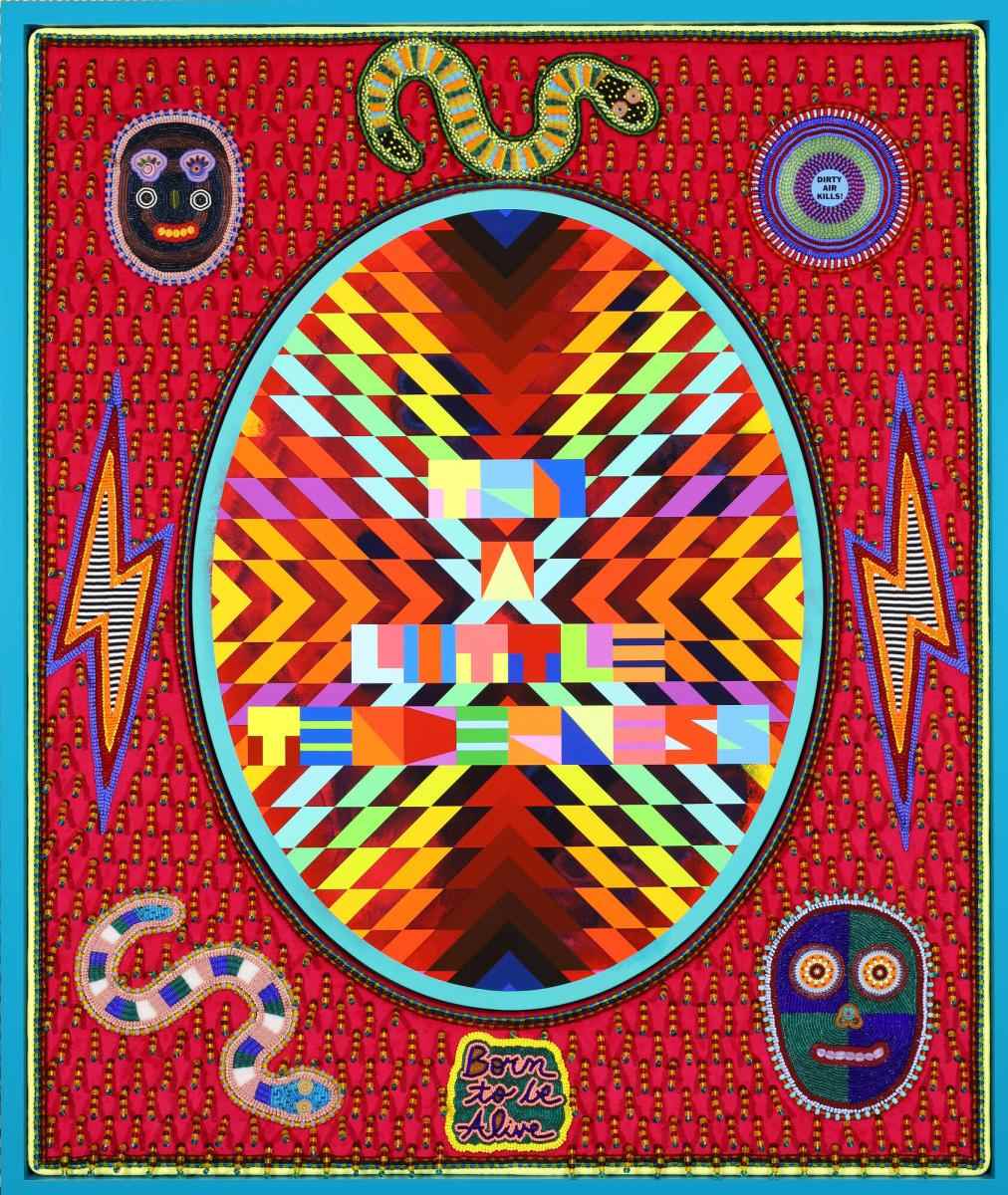
"Recognize whose lands these are on which we stand. Ask the deer, turtle, and the crane. Make sure the spirits of these lands are respected and treated with goodwill. The land is a being who remembers everything." These lines come from the poem “Conflict Resolution for Holy Beings” by Muscogee (Creek) author Joy Harjo. They remind us that the identity of Turtle Island—also referred to as North America—resides in the land itself and is not shaped only by legislation, borders, politicians, or treaties. This exhibition weaves together two narratives: one that relates to Oberlin as a site on the Underground Railroad for Black American freedom seekers; the other to Indigenous land sovereignty and ancestral connections in this region and beyond. These stories are part of the fabric of Oberlin College, founded in 1833 as an abolitionist institution dedicated to training Christian missionaries. Some, in their evangelizing mission, engaged with Native groups and gave the name Oberlin to geological features they encountered elsewhere in the United States. Drawing connections among 300 years of art, the artists explore histories of forced migration, emancipation, and activism. Complicating patriotic symbols and evading top-down, official records, they gravitate toward images of land and sea and rely on intimate, personal experiences that open out onto larger narratives and systemic forces. Trauma, oppression, enslavement, and the theft of land inevitably feature in their stories, but these artists also celebrate their identities and emancipatory futures. The exhibition’s centerpiece is a newly commissioned installation by Tongva artist Mercedes Dorame. The work centers on the role of waterways in connecting people to their lineage and, thus, to their identity. For Dorame, waterways link her to her heritage and her ancestors, both in her native Tovaangar (Homeland) and in the territories around Oberlin College—the unceded ancestral lands originally stewarded by Mound Builders, Erie, Wyandotte, Mingo, and numerous other confederated Indigenous nations and peoples. As an artist skeptical of borders, Dorame notes, “Waterways are not linear paths. They are passageways to freedom.”